
Sekolah Dasar (SD) - Tahun 2007 Matematika, IPA, IPS, Bahasa Indonesia, Bahasa Inggris - Tahun 2006 Matematika, IPA, IPS, Bahasa Indonesia, Bahasa Inggris - Tahun 2005 Matematika, IPA, IPS, Bahasa Indonesia, Bahasa Inggris, PKN - Tahun 2004 Matematika, IPA, IPS, Bahasa Indonesia, Bahasa Inggris, PKN - Tahun 2003 Matematika, IPA, IPS, Bahasa Indonesia, PKN Sekolah Menengah Pertama (SMP) Sekolah Menengah Atas (SMA) | |
| |
| |
| | |
| Bagi yang ingin mengikuti Ujian Nasional 2006, tidak ada salahnya mengetahui hal-hal berikut : (Sumber Puspendik) - Peraturan Mendiknas Mengenai Ujian Nasional 2005/2006 - Standar Kompetensi Yang akan diujikan (Kurikulum 2004) - Standar Kompetensi berdasarkan Kurikulum 1994 Untuk SMA, ini ada penyelesaian soal Matematika yang diambil dari puspendik : source : www.invir.com |
.
Minggu, 09 November 2008
download soal-soal UAN

Selasa, 28 Oktober 2008
The crown of the sun
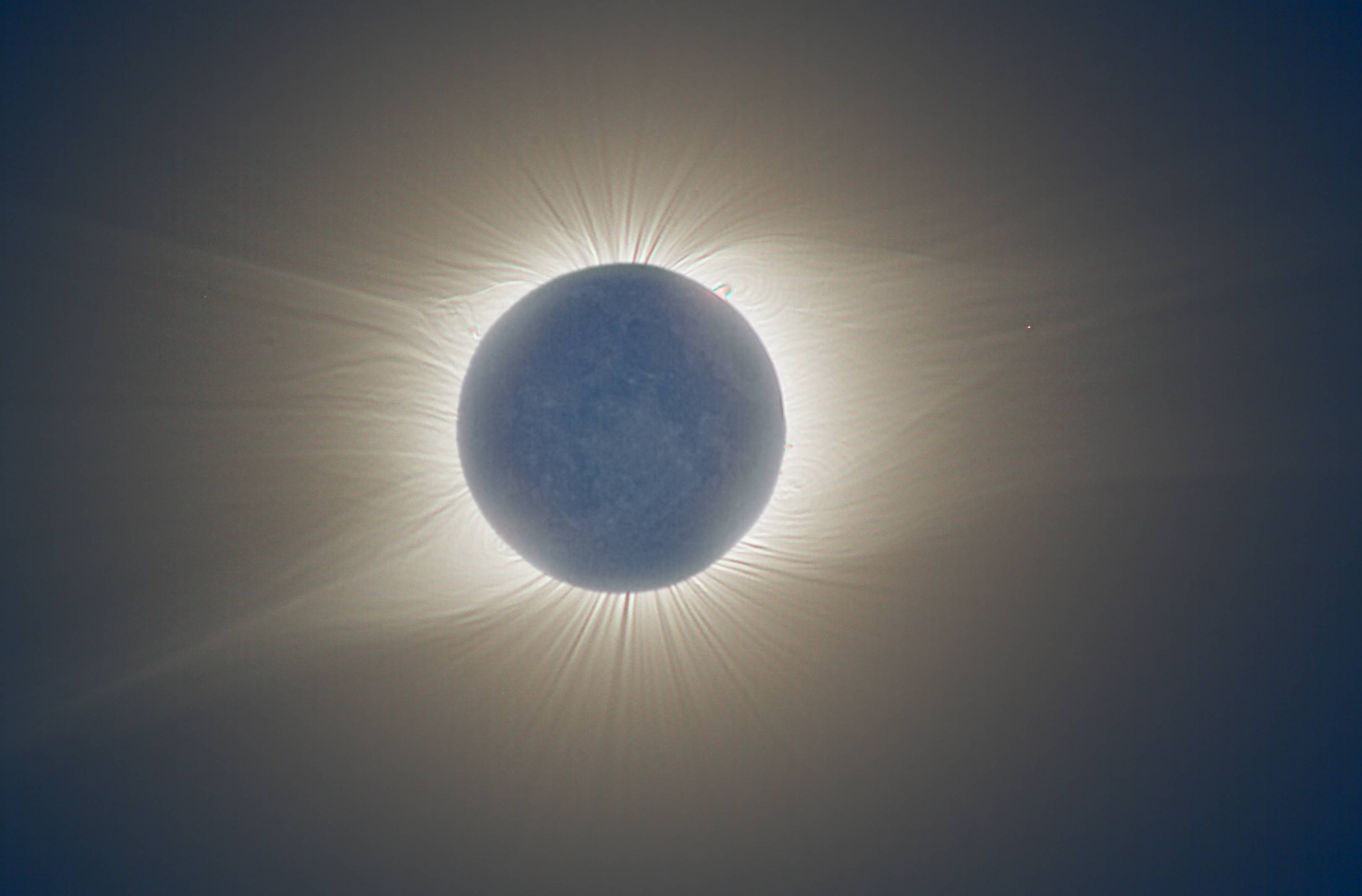
During a total solar eclipse, the Sun's extensive outer atmosphere, or corona, is an inspirational sight. The subtle shades and shimmering features of the corona that engage the eye span a brightness range of over 10,000 to 1, making them notoriously difficult to capture in a single picture. But this composite of 28 digital images ranging in exposure time from 1/1000 to 2 seconds comes close to revealing the crown of the Sun in all its glory. The telescopic views were recorded near Kochenevo, Russia during the August 1 total solar eclipse and also show solar prominences extending just beyond the edge of the eclipsed sun. Remarkably, features on the dark near side of the New Moon can also be made out, illuminated by sunlight reflected from a Full Earth.
Biofuel

source : en.wikipedia.org/wiki/Biofuels
What is PHYSICS?
This energy can take the form of motion, light, electricity, radiation, gravity . . . just about anything, honestly. Physics deals with matter on scales ranging from sub-atomic particles (i.e. the particles that make up the atom and the particles that make up those particles) to stars and even entire galaxies.
How Physics Works
As an experimental science, physics utilizes the scientific method to formulate and test hypotheses that are based on observation of the natural world. The goal of physics is to use the results of these experiments to formulate scientific laws, usually expressed in the language of mathematics, which can then be used to predict other phenomena.
The Role of Physics in Science
In a broader sense, physics can be seen as the most fundamental of the natural sciences. Chemistry, for example, can be viewed as a complex application of physics, as it focuses on the interaction of energy and matter in chemical systems. We also know that biology is, at its heart, an application of chemical properties in living things, which means that it is also, ultimately, ruled by the physical laws.
Because physics covers so much area, it is divided into several specific fields of study, such as electronics, quantum physics, astronomy, and biophysics.
More Physics Q&A
Physics - major concepts:
Fields of Physics
Major Laws of Physics
Fundamental Forces of Physics
Physics - modern physics theories:
Quantum Physics Overview
Einstein's Theory of Relativity
10 Weirdest Physical Theories.
source:Andrew Zimmerman Jones, About.com
